
Worried About a Skin Lesion? Signs to Look For and When to Get It Checked
- Dr Duncan Lowe
- May 11
- 3 min read

Common Skin Changes and Why They Occur
Many people notice changes to their skin at some point in their lives, be it new marks that weren’t there before or longer-standing lesions that might become itchy or irritated. In many cases, these changes are not dangerous. Lots of common skin lesions are entirely benign and changes may simply reflect normal skin ageing, sun exposure, or irritation from rubbing or shaving.
When Should You Be Concerned About a Skin Lesion?
However, some skin changes are worth having assessed — particularly a longstanding mole that starts to look different in shape or colour, a patch of skin that bleeds or scabs and will not heal properly, a new mark that appears and looks different to other moles on your skin, or any mark or lump that is rapidly growing.
Why People Often Delay Getting Skin Lesions Checked
At Glasgow Skin Specialists, we understand that patients are often unsure whether something truly needs checked. Many people delay seeking advice because they are anxious about what they might be told, worried about wasting a doctor’s time, or hoping the problem will simply settle on its own.
Our approach is that any changing skin lesion is worth having reviewed by an expert, and to reassure that most skin lesions we see do not turn out to be skin cancer.
When Is It Worth Getting a Skin Lesion Assessed?
· A new mole that appears after the age of 40
· A longstanding mole that starts to change in shape, colour, or size
· A lesion that repeatedly bleeds or crusts
· A patch of skin that does not heal properly
· A new lesion that continues to grow
· A lump beneath the skin that becomes larger or uncomfortable
· A lesion that looks noticeably different from your other marks or moles
Not all skin cancers look dramatic or dark in colour. Some appear quite subtle, particularly in the early stages. Equally, many completely harmless lesions can look alarming to patients. That uncertainty is one of the reasons assessment can be valuable.
Common types of skin cancer
The three most common forms of skin cancer are:
Basal Cell Carcinoma (BCC) BCCs are often slow-growing and may appear as shiny bumps, persistent sores, or areas that repeatedly scab or bleed. They can often be itchy. They are generally not too worrying and can be easily treated, especially if removed early. Read more here.
Squamous Cell Carcinoma (SCC) SCCs can appear as crusted, scaly, or rapidly growing lesions and may occasionally become tender or ulcerated. Some can grow quickly and all should be removed as early as possible to reduce the risk of needing further treatment. Read more here.
Melanoma Melanoma is less common but potentially more serious. It often presents as a changing pigmented lesion or mole. Melanoma is very successfully treated if removed early, but has a high risk of spreading if left. Read more here.
What happens during a skin lesion assessment?
A consultation usually involves:
· Discussing the history of the lesion
· Taking a background history
· Examining the lesion and possibly your lymph nodes
· Discussion of your treatment options
In many cases, patients are reassured that the lesion appears benign and no treatment is required. Where removal or biopsy is advised, this can often be arranged promptly.
A calm, specialist-led approach
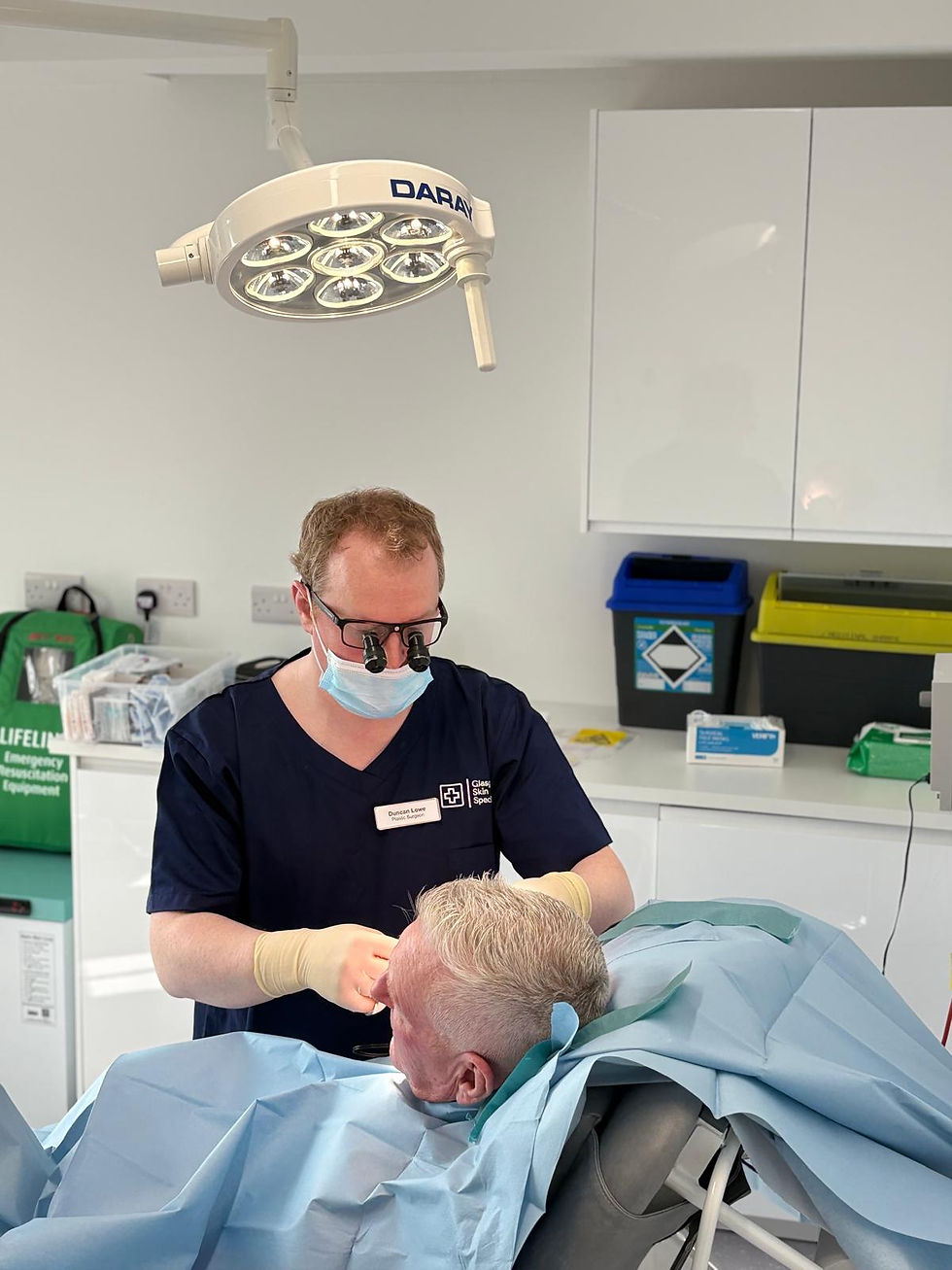
At Glasgow Skin Specialists, patients are assessed by an NHS-trained plastic surgeon with experience in skin lesion diagnosis and minor skin surgery.
We understand that many patients attending for assessment are worried or uncertain. Our aim is to provide clear advice, careful assessment, and a calm environment where patients feel listened to and supported.
If you are concerned about a skin lesion or would simply like specialist advice, we would be happy to help
.
Written by the clinical team at Glasgow Skin Specialists.


Comments